Training Manual for the Monitoring and Management of Seagrass in West Africa
Training Manual for Seagrass Monitoring and Management in the RAMPAO Region

Training Manual for Seagrass Monitoring and Management in the RAMPAO Region

Edit Column Final Project Evaluation (PDF) This evaluation document outlines the key activities and impact of the ResilienSEA project from 2018-2022.
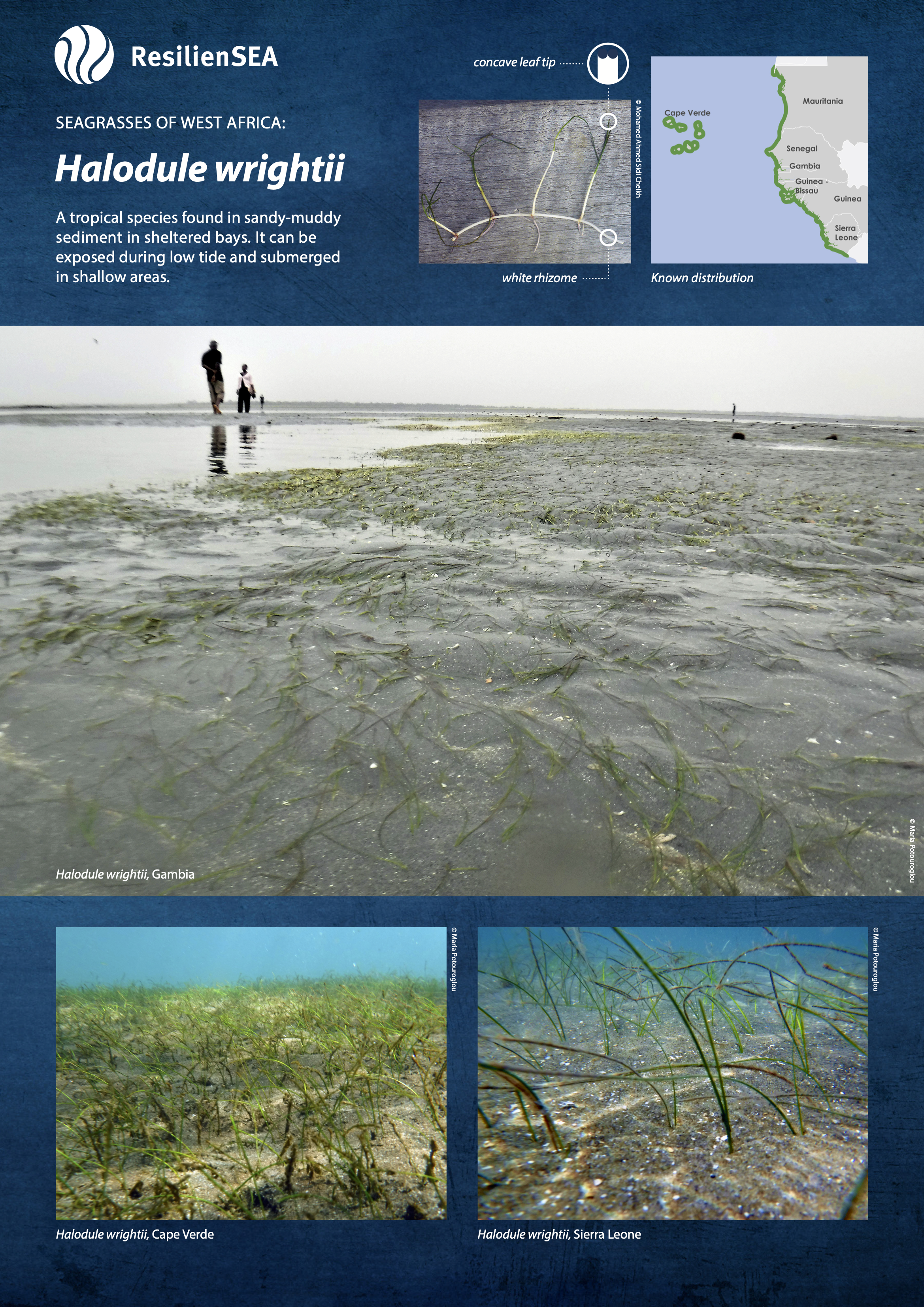
Seagrasses of West Africa Explore the three species of seagrasses commonly found in West Africa: Halodule wrightii, Cymodocea nodosa, and Zostera noltii
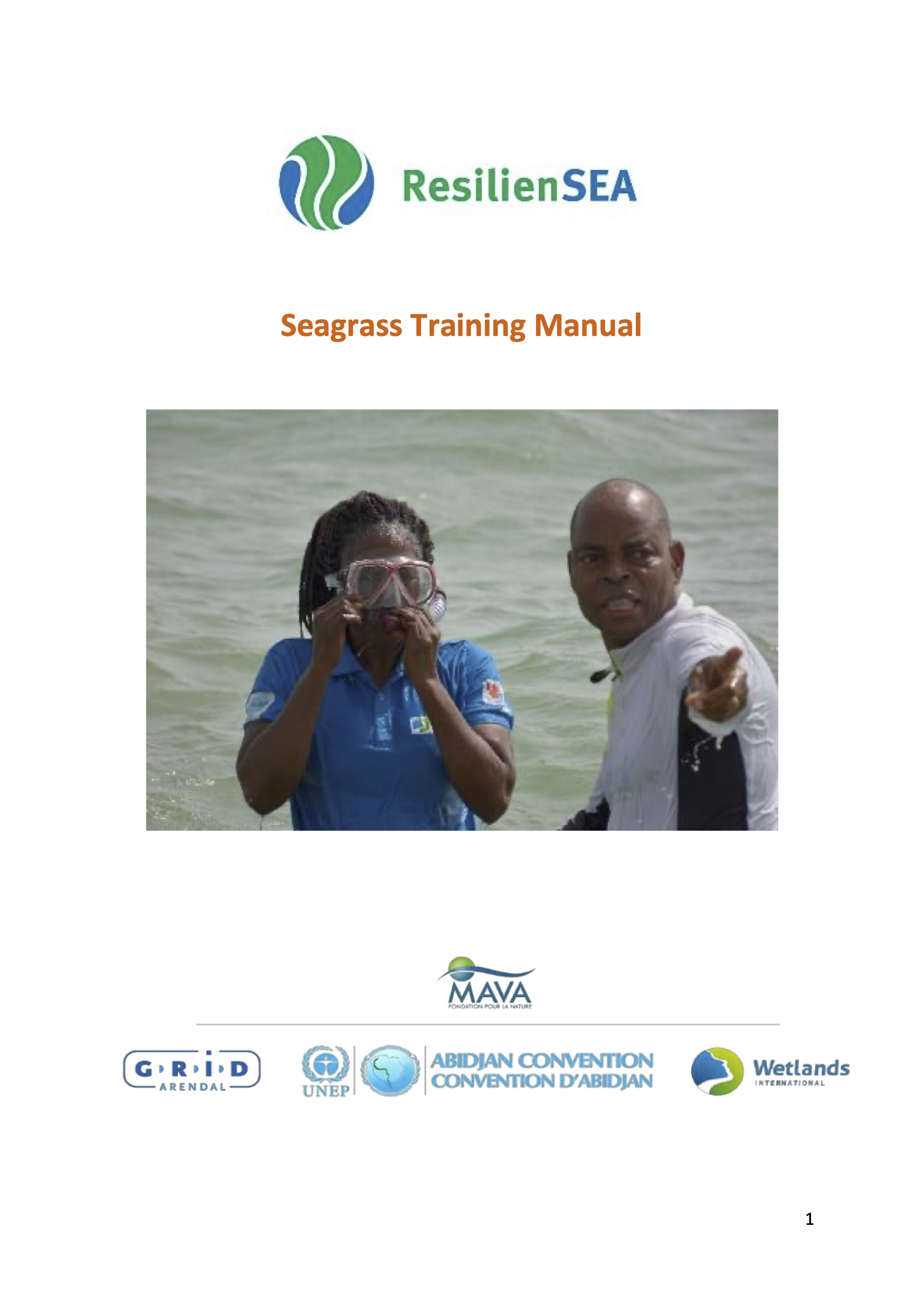
General objective of the training: Participants will study seagrass biology, learn seagrass taxonomy, discuss seagrass ecology, gain knowledge of monitoring and become skilled at conducting a field monitoring event. This training course is for scientists/managers who plan to establish new monitoring sites, lead and co-ordinate monitoring events, map seagrass meadows, conduct data entry, and raise seagrass awareness among local communities/end users.

Seagrasses provide valuable ecosystem services–benefits to humans–but are now being lost globally at rapid rates due mainly to anthropogenic stressors. Ecosystem services are defined as the benefits that humans derive from the environment, in this case, from seagrass ecosystems. This report provides an initial assessment of seagrass ecosystem services in seven countries of West Africa, including Mauritania, Senegal, The Gambia, Guinea Bissau, Guinea, Cape Verde and Sierra Leone.

The Banc d'Arguin National Park (PNBA) is one of the largest national parks in Africa. The importance of the park in terms of biodiversity and cultural heritage requires guaranteeing its socio-ecological integrity. Aware of this situation, the PNBA managers and the Delegation for Fisheries Surveillance and Control at Sea (DSPCM) – now the Mauritanian Coast Guard (GCM) – set up a participatory maritime surveillance system in 1999 with the Imraguen, a local community of desert fishermen.
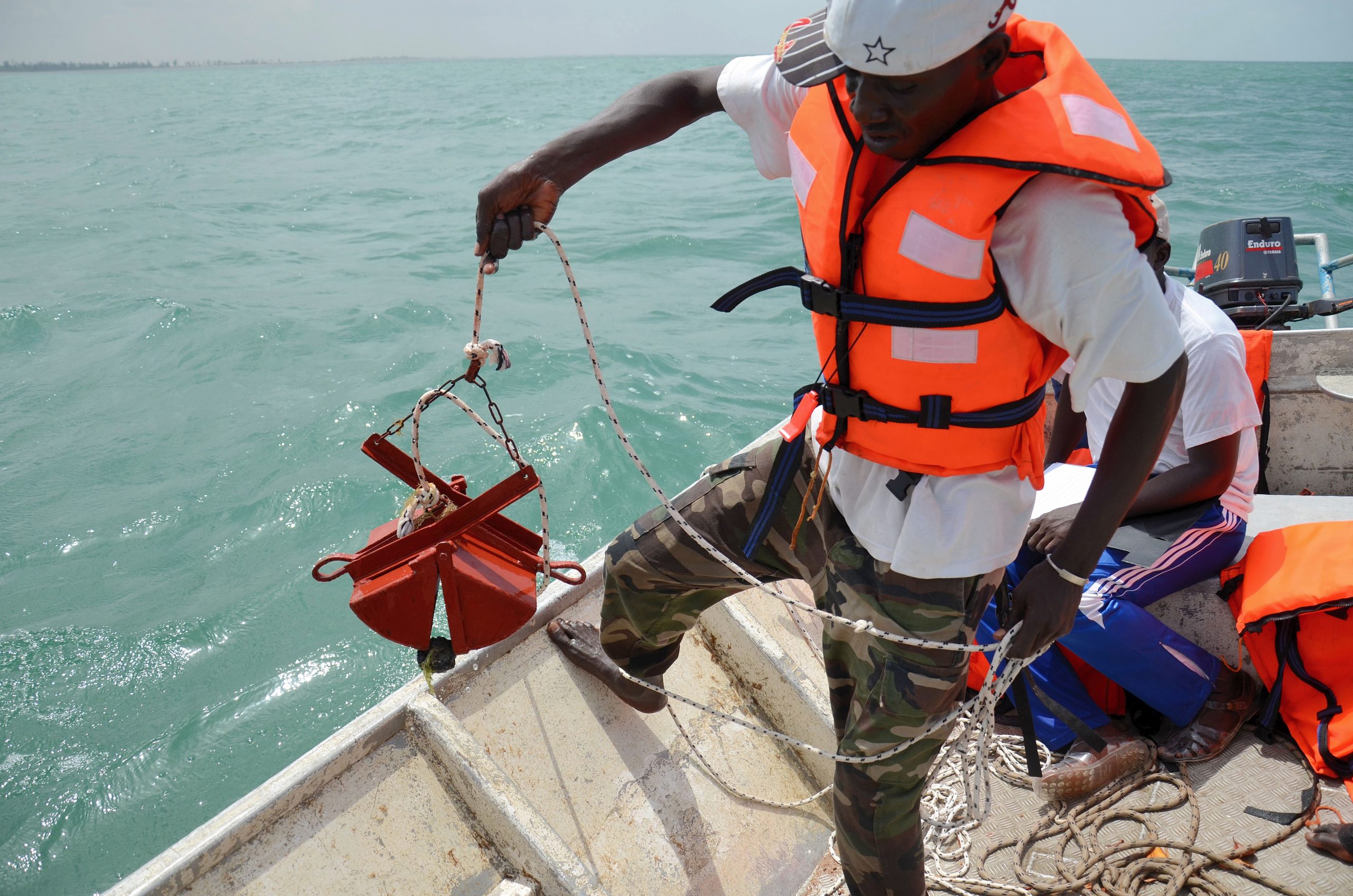
In the Joal-Fadiouth MPA (Senegal), community-based approaches such as participatory seagrass mapping enhance the legitimacy of conservation actions by drawing upon local fisherfolk knowledge and help raising awareness about ecosystem interrelations that are important to commercial fisheries and to the communities that depend on them.
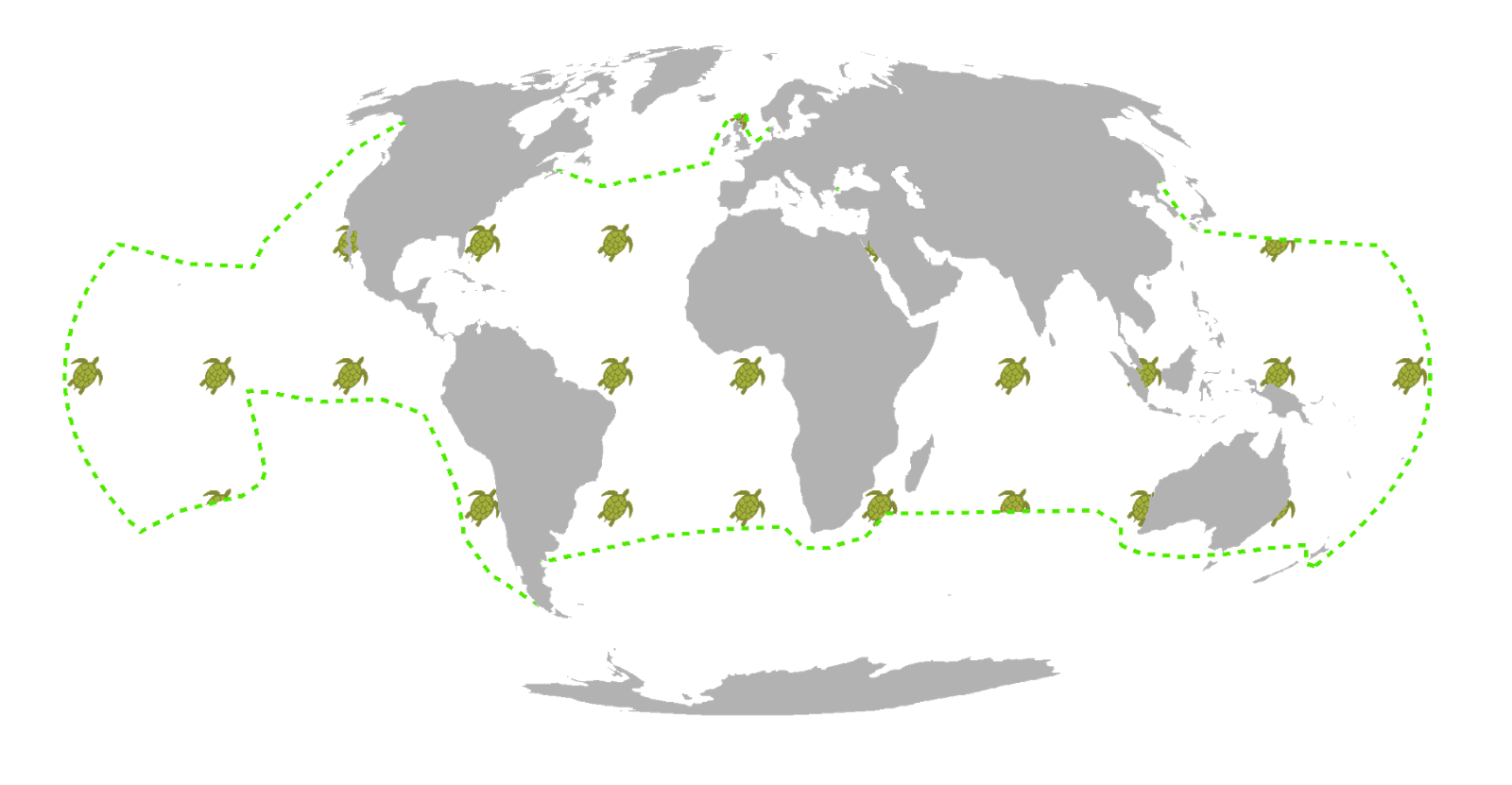
Tracking the green turtles’ 1,000-kilometre migration from Guinea-Bissau to the lush seagrass meadows in Mauritania
This report synthesizes current knowledge of seagrass ecosystems, highlights their importance, and provides policy recommendations.